Mounted orchid care
How to Care for Mounted Orchids
Mounted orchids reveal what pots often hide. You can see the roots absorb water, dry, explore the surface and eventually attach to the mount. Successful care begins with watching that process and adjusting to the orchid, the mount and your growing environment.
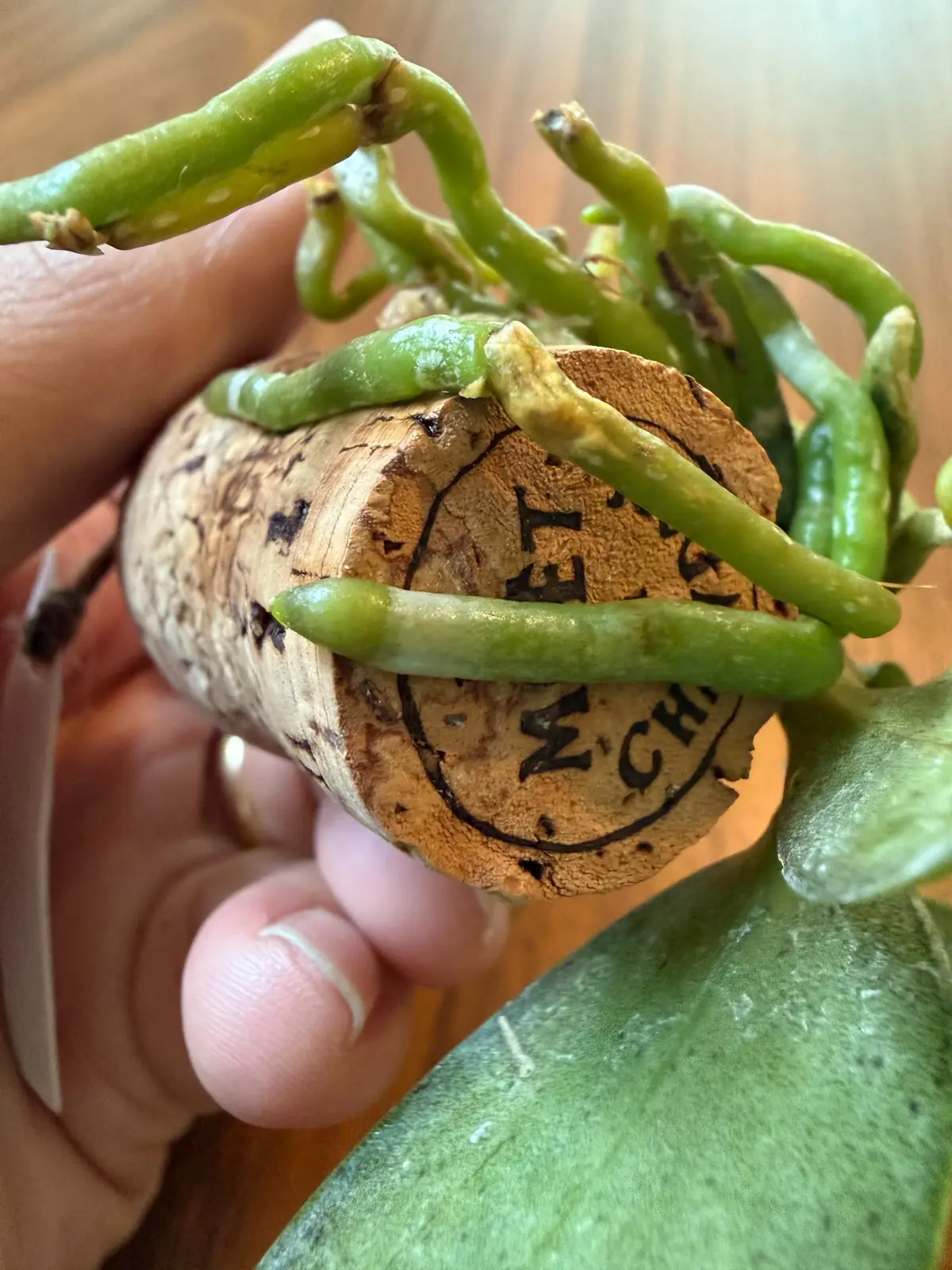
Water thoroughly, then watch the drying time
When watering, wet the roots and the moisture-retentive material around them thoroughly. Let excess water drain and keep air moving around the mount. The goal is not to give a small splash on a fixed calendar. It is to hydrate the root system and learn how quickly the mount returns toward dryness.
A cork-mounted orchid in a warm, bright, breezy space may dry much faster than the same species in a humid cabinet. Season, indoor heating, air conditioning and the amount of moss around the roots can all change the rhythm.
| Condition | What it may change |
|---|---|
| Warm temperatures | Water evaporates faster and roots may dry sooner. |
| Stronger airflow | Roots dry more efficiently, reducing the time they remain wet. |
| Higher humidity | The mount may remain moist longer between waterings. |
| More sphagnum | Moisture stays around the roots longer than it does on bare cork. |
| Smaller mount | A small cork or piece of wood may hold less water and dry quickly. |
Let the roots help you read the plant
Many orchid roots have a protective outer layer called velamen. On some orchids, dry roots appear silvery or pale and become greener when wet. That color change can be useful, but it is not universal. Root color varies by species, age, light exposure and surface condition.
Look for active root tips, firm roots and new growth. A fresh tip shows that the orchid is actively extending its root system. Dark, hollow or collapsing roots deserve attention, especially when paired with persistent moisture or decline elsewhere in the plant.
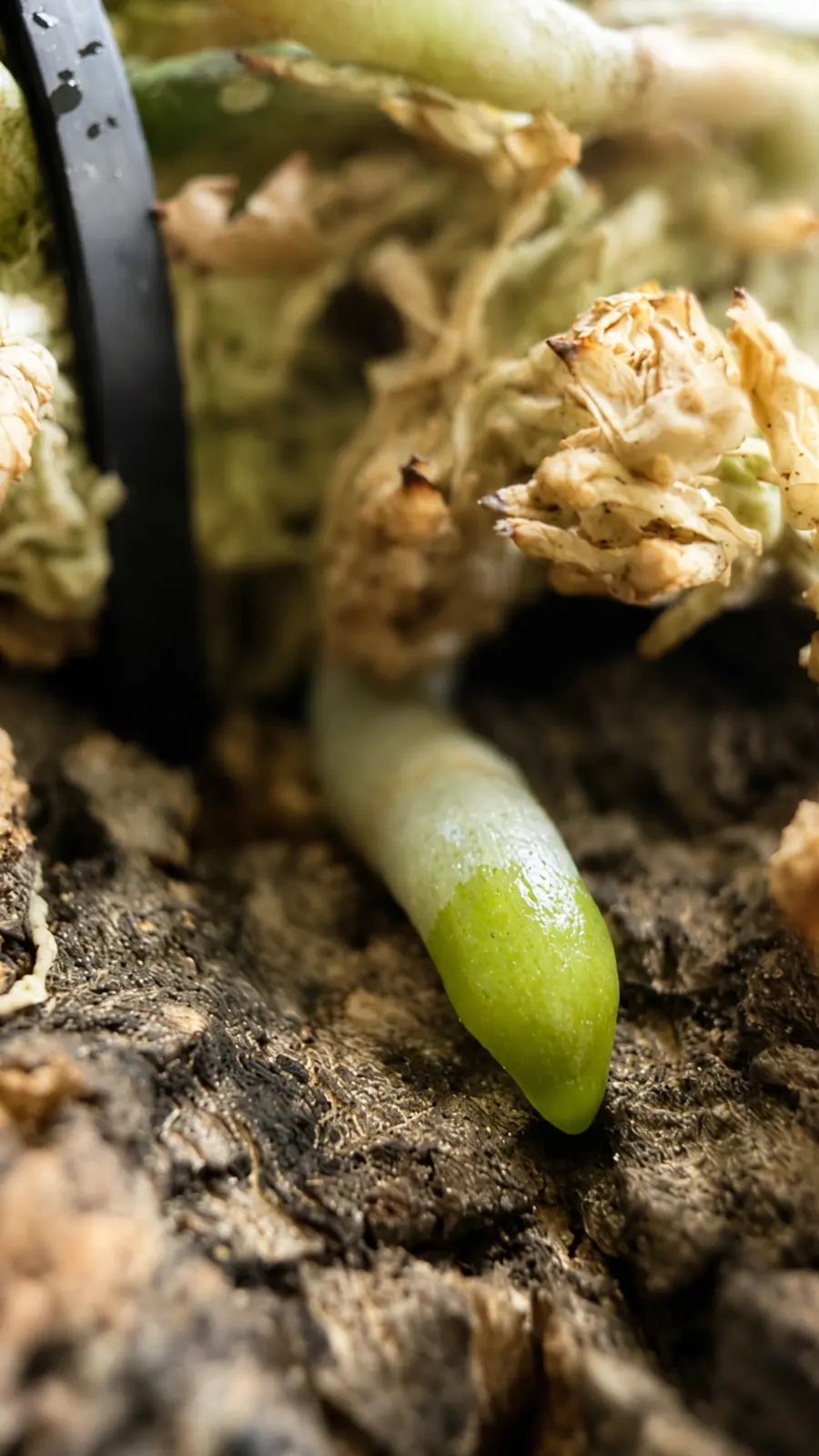
Provide species-appropriate light
There is no single light level for every mounted orchid. A small Tolumnia and a shade-preferring miniature may need different placements even when they use similar mounts. Bright, indirect or filtered light is a reasonable starting point for many selections, followed by species-specific adjustments.
Increase light gradually. Sudden exposure to intense sun can heat the mount and damage leaves that were not acclimated to it. Leaf color, growth, root activity and flowering performance all help you evaluate whether the location is working.
Balance humidity with airflow
Humidity slows moisture loss, while airflow helps wet roots exchange air and dry. Mounted orchids benefit from both factors working together. High humidity without air movement can keep surfaces wet for too long. Strong airflow in very dry conditions can dehydrate a small mount rapidly.
Indoors, avoid sealing a wet plant into stagnant air. Outdoors, watch how wind, heat and direct sun change the drying rate. In a cabinet or terrarium, use gentle circulation and confirm that the species is suitable for the humidity level.
Feed according to active growth and species needs
Mounted orchids have little or no potting mix to retain nutrients, so fertilizer reaches the roots directly during watering. Use an orchid fertilizer at an appropriate diluted concentration and follow its label. Flush the roots and mount periodically with plain water to limit mineral buildup.
Active roots and new growth usually indicate that the plant can use nutrients more effectively. Reduce or adjust feeding when growth slows, following the needs of the species and your growing conditions.
Expect an adjustment period after mounting or shipping
An orchid may need time to adjust after its roots are handled, its environment changes or it travels in a box. Existing flowers can fade sooner than expected. Some leaves may wrinkle temporarily, especially when the root system has been disturbed.
Evaluate the direction of the plant instead of one isolated symptom. New roots, fresh leaves and stable growth are encouraging signs. Continued decline, spreading tissue damage, foul odor or roots that remain wet and deteriorate require closer investigation.
What to do when a mounted orchid arrives
- Unpack it promptly and inspect the plant, roots and mount.
- Review the care guide and exact listing information supplied for that orchid.
- Place it in suitable light without immediately exposing it to harsh direct sun.
- Hydrate according to its condition and shipping instructions, then allow drainage and airflow.
- Keep the environment reasonably stable while watching for new roots and growth.
Mounted orchid care questions
How often should a mounted orchid be watered?
There is no universal schedule. Species, mount material, temperature, humidity, light and airflow determine how quickly it dries. Water thoroughly and adjust after observing your conditions.
Should mounted orchid roots dry between waterings?
Many epiphytic orchids benefit from air around their roots and should not remain continuously saturated. The appropriate degree and duration of drying depends on the species.
Can mounted orchids grow indoors?
Yes, when the location provides suitable light, watering, humidity and air movement. Dry indoor air may require closer observation of the mount’s drying time.
Do mounted orchids need moss?
Not always. A small amount of sphagnum can help retain moisture, but the amount should suit the orchid and environment. Too much moisture-retentive material can slow drying excessively.
When can temporary support be removed?
Remove support only after healthy roots have attached securely enough to stabilize the orchid. Timing varies widely by species, season and growing conditions.
Continue learning